When I create structured content, I always think about engagement and student experience. Without that focus, you can spend time on content that looks lovely to you but gives students no reason to stay, or even to visit. Low activity and low participation follow, and soon you’re back to a repository of PowerPoints, slide decks and Word documents, just like 15 years ago. We can do better than that. We owe our students more.
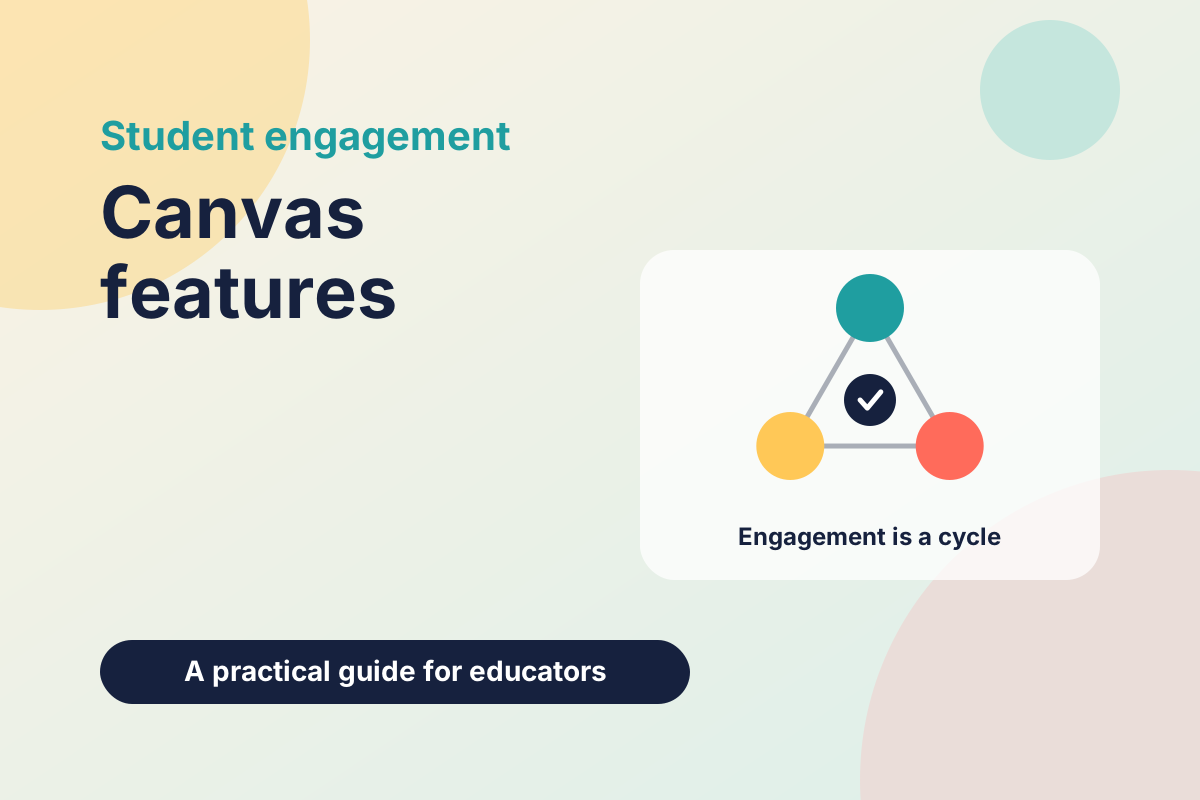
Here are the Canvas features that improve engagement, and how they work in online and blended courses. First, the engagement cycle that Canvas uses:

The image shows three elements of engagement, each with three strategies you can use to improve it. Keep these in mind when you consider your students’ circumstances, then choose the activities and tools that suit the moment.
Personalised Learning
Some strategies also personalise learning. Educators should design learning experiences that put the learner at the centre. To do that you must:
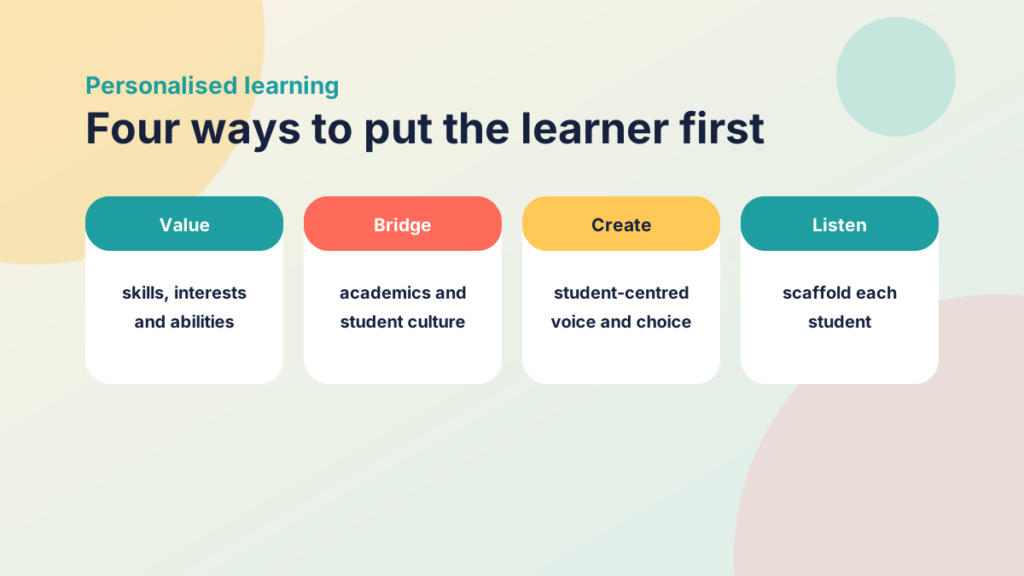
- Value student skills, interests, and abilities and channel them in academically important ways
- Bridge academics with students’ culture as a vehicle for learning
- Create and facilitate learning experiences that are student-centered and promote student voice and choice
- Take time to listen and individually help students scaffold and understand content and process skills
©️ Canvas Certified Educator : https://learn-cce.catalog.instructure.com/
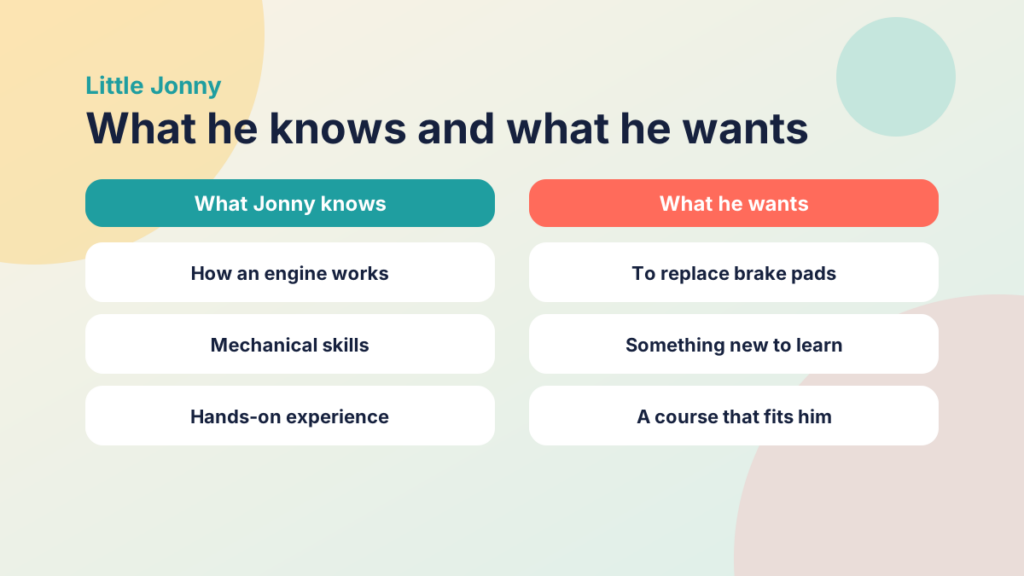
Little Jonny is feeling demotivated!
Jonny finds the content unaspiring. He already knows the inner workings of an engine and has excellent mechanical engineering skills, but he wants to learn how to replace brake pads, which he has never been shown. He expected the course to teach him that, and he doesn’t need ‘Introduction to the Combustion Engine’. He’s been there and done that.
Jonny is struggling with Motivation and feels bored. You have three strategies that could help. He would benefit from resources that support ‘student autonomy’ and differentiate away from the bulk of the session, while his valuable experience would help others in collaborative activities. How could you do both?
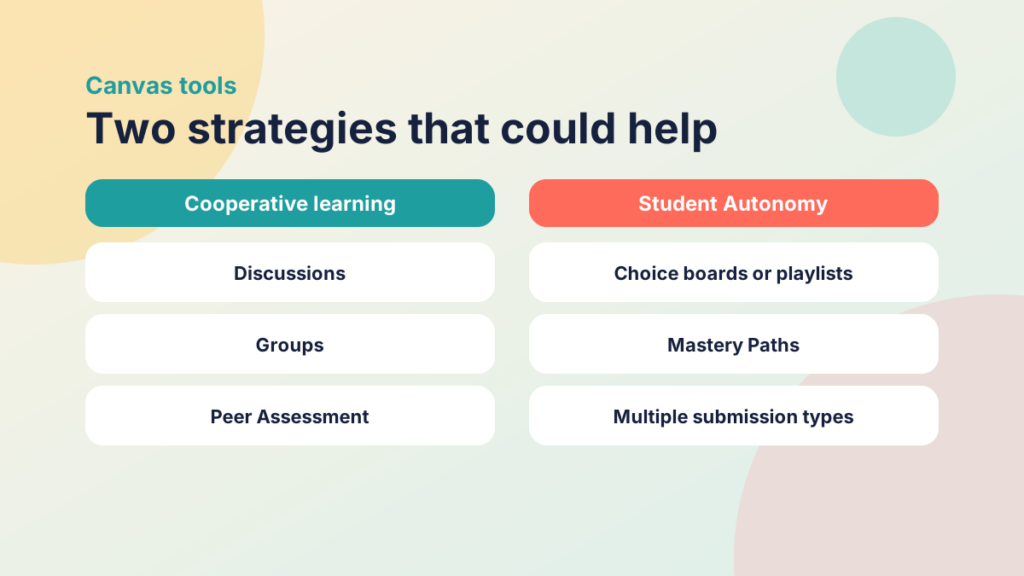
Two strategies come to mind: Cooperative & Social Learning and Student Autonomy.
Canvas tools and teaching strategies for Cooperative & Social Learning
- Discussions (Agency)
- Groups (Agency)
- Peer Assessment (Meaningful Feedback)
Canvas tools and teaching strategies for Student Autonomy
- Pages with choice boards or playlists (Authentic Choice / Differentiation / Agency / Self Discovery)
- Mastery Paths (Differentiation / Agency)
- Assignment with multiple options for submission types (Differentiation)
Try it yourself
Which strategy does the tool support?
Decide whether each Canvas tool mainly supports Cooperative & Social Learning or Student Autonomy, as grouped in this post.
Try it yourself
Help Jonny
Jonny is bored on his course. Choose the best answer for each question.